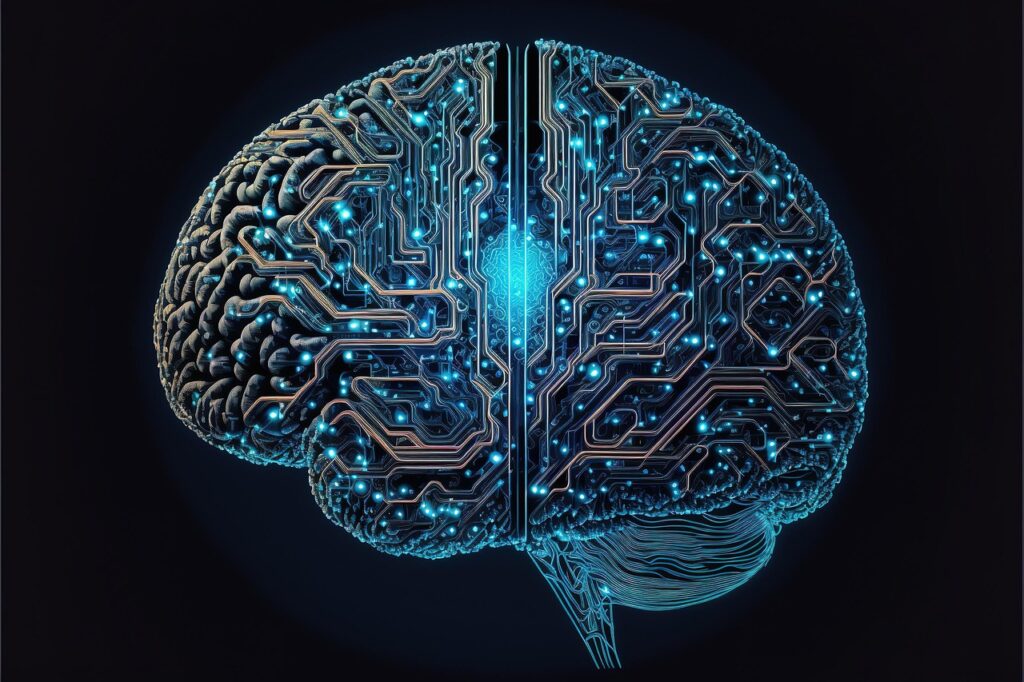

Many assume that artificial intelligence (AI) is still in its infancy, but the reality is that AI has been making significant strides in recent years, transforming the way businesses operate and people live. However, despite these advancements, there are still numerous challenges associated with implementing and integrating AI solutions effectively. For instance, companies like Google and Amazon have been at the forefront of AI research and development, investing billions of dollars into creating sophisticated AI systems that can learn, reason, and interact with humans seamlessly. Yet, smaller businesses and individuals often struggle to keep pace, lacking the resources and expertise needed to fully harness the power of AI. This disparity highlights the need for more accessible and user-friendly AI technologies that can be easily integrated into daily life.
📝 What's In This Article
Common Challenges With What Does Artificial Intelligence (advanced strategies) Mean?
Complexity of AI Systems
The complexity of AI systems is a significant challenge, as these systems often require extensive data, computational power, and expertise to develop and maintain. This complexity arises from the need for AI algorithms to process vast amounts of data, recognize patterns, and make decisions based on that data, all while minimizing errors and biases. The development of such sophisticated systems demands a deep understanding of both the underlying technology and the specific problem domain, making it difficult for non-experts to navigate.
Data Quality and Availability
Data quality and availability are crucial for the effective functioning of AI systems, as these systems learn from the data they are trained on. Poor data quality, including inaccuracies, inconsistencies, and biases, can lead to suboptimal performance and incorrect decisions. Furthermore, the availability of relevant data is often limited, especially in niche domains or areas where data collection is challenging, hindering the development and deployment of AI solutions.
Explainability and Transparency
The explainability and transparency of AI decisions are becoming increasingly important, especially in high-stakes applications such as healthcare and finance. As AI systems make decisions that affect people’s lives, there is a growing need to understand how these decisions are made, to ensure fairness, accountability, and trust in the system. However, many AI models are inherently complex and difficult to interpret, making it challenging to provide clear explanations for their decisions.
Ethical Considerations
Ethical considerations are a significant challenge in the development and deployment of AI, as AI systems can perpetuate and amplify existing biases and inequalities if not designed with ethical principles in mind. Ensuring that AI systems are fair, respect privacy, and are aligned with human values is essential but poses a considerable challenge, requiring careful consideration of the potential impact of AI on society and individuals.
Integration with Existing Systems
The integration of AI solutions with existing systems and infrastructure is another challenge, as it often requires significant modifications to legacy systems and processes. This integration can be costly and time-consuming, especially in organizations with complex, outdated IT systems, and may require substantial changes to business operations and culture.
Latest Artificial Intelligence Technologies
1. Deep Learning
Deep learning is a subset of machine learning that has shown remarkable success in image and speech recognition, natural language processing, and decision-making. Implementing deep learning involves selecting appropriate neural network architectures, training the model with large datasets, and fine-tuning hyperparameters for optimal performance. Deep learning can be applied in various domains, including healthcare for disease diagnosis, in finance for risk analysis, and in autonomous vehicles for navigation.
- Strengths:
- High accuracy in pattern recognition and classification tasks
- Ability to learn from large datasets, improving performance over time
- Flexibility in application across multiple domains and industries
2. Natural Language Processing (NLP)
NLP is a field of AI focused on enabling computers to understand, interpret, and generate human language. Implementing NLP involves using techniques such as tokenization, sentiment analysis, and machine translation to develop applications like chatbots, language translators, and text summarizers. NLP can significantly enhance customer service, content creation, and information retrieval processes.
- Strengths:
- Improves human-computer interaction through more natural interfaces
- Enhances customer experience with personalized and responsive service
- Facilitates global communication by breaking language barriers
3. Computer Vision
Computer vision is an AI discipline that deals with interpreting and understanding visual data from images and videos. Implementing computer vision involves training models to recognize objects, detect anomalies, and classify images, which can be applied in surveillance, healthcare imaging, and self-driving cars. This technology requires large datasets of images and videos for training, as well as powerful computational resources.
- Strengths:
- Enables machines to perceive and understand visual information
- Has numerous applications in security, healthcare, and transportation
- Can automate tasks that require visual inspection and judgment
4. Reinforcement Learning
Reinforcement learning is a type of machine learning where an agent learns to behave in an environment by performing actions and seeing the results. Implementing reinforcement learning involves defining the environment, specifying the reward function, and selecting an appropriate algorithm. This approach is particularly useful in robotics, game playing, and autonomous systems, where trial and error can lead to optimal policies.
- Strengths:
- Allows agents to learn from their environment without explicit instruction
- Can be applied to complex, dynamic environments where modeling is challenging
- Encourages exploration and learning through experimentation
5. Edge AI
Edge AI refers to the deployment of AI models on edge devices, such as smartphones, smart home devices, and autonomous vehicles, rather than in the cloud. Implementing edge AI involves optimizing models for low-power, low-latency operation, and ensuring real-time processing capabilities. This approach enhances privacy, reduces latency, and improves the overall performance of AI applications in real-world scenarios.
- Strengths:
- Reduces latency by processing data closer to the source
- Improves privacy by minimizing the amount of data sent to the cloud
- Enhances reliability by reducing dependence on network connectivity
6. Explainable AI (XAI)
XAI is a set of techniques used to explain the decisions made by AI models, making them more transparent and trustworthy. Implementing XAI involves using methods such as feature importance, partial dependence plots, and model interpretability techniques to provide insights into how AI models arrive at their decisions. This is crucial for building trust in AI systems, especially in high-stakes applications.
- Strengths:
- Provides insights into AI decision-making processes
- Enhances trust and accountability in AI systems
- Facilitates the identification and mitigation of biases in AI models
| Approach | Old Way | Better Way | Result |
|---|---|---|---|
| Decision Making | Rule-based systems | AI-driven systems | Improved accuracy and speed |
| Data Analysis | Manual analysis | Automated analysis with AI | Faster insights and reduced errors |
| Customer Service | Human customer support | AI-powered chatbots | 24/7 support and reduced costs |
| Healthcare Diagnosis | Manual diagnosis by doctors | AI-assisted diagnosis | More accurate and quicker diagnosis |
| Financial Forecasting | Traditional statistical models | AI-driven predictive models | Improved forecasting accuracy |
Why People Are Paying Attention
The applications of AI are vast and varied, with many real-world examples demonstrating its potential. For instance, companies like Netflix and Amazon use AI to personalize recommendations, enhancing user experience and driving sales. In healthcare, AI is used for disease diagnosis, patient outcomes prediction, and personalized treatment planning, leading to better patient care and outcomes. Furthermore, AI-powered autonomous vehicles are being tested and implemented, promising to revolutionize transportation safety and efficiency.
In the field of education, AI is being used to create personalized learning plans, adaptive assessments, and intelligent tutoring systems, aiming to improve learning outcomes and make education more accessible. The use of AI in environmental monitoring and conservation is also gaining attention, with applications in wildlife tracking, climate modeling, and sustainable resource management. These examples, among many others, illustrate why people are paying close attention to the developments and potential of AI.
The ethical implications of AI are also a significant concern, with many experts and organizations advocating for the responsible development and use of AI. This includes ensuring that AI systems are fair, transparent, and respect human rights and dignity. Efforts to address these challenges are underway, with the development of guidelines, regulations, and standards for AI development and deployment. As AI continues to evolve and become more integrated into daily life, addressing these ethical considerations will be crucial.
Additionally, the economic impact of AI is a topic of much discussion, with predictions of both job displacement and creation. While AI may automate some jobs, it is also expected to create new job opportunities in fields related to AI development, deployment, and maintenance. Furthermore, AI has the potential to increase productivity, efficiency, and innovation, leading to economic growth and improved standards of living. As such, understanding the economic implications of AI and preparing for its impact on the workforce is essential for individuals, businesses, and governments.
To wrap up, the attention being paid to AI is not just about its technological advancements but also about its potential to transform numerous aspects of society and the economy. From improving healthcare and education to enhancing environmental sustainability and economic productivity, AI holds great promise. However, it also presents challenges that must be addressed to ensure that its benefits are realized and its risks are mitigated.
Step-by-Step Action Plan
- Start by identifying areas in your organization or personal projects where AI can add value, such as automating repetitive tasks or enhancing decision-making processes, because this will help focus efforts on high-impact applications. Implementing AI solutions begins with understanding where they can make the most significant difference.
- Develop a basic understanding of AI concepts and technologies, including machine learning, deep learning, and natural language processing, because having a solid foundation in AI fundamentals is essential for making informed decisions about AI adoption and development. This knowledge will guide the selection of appropriate AI tools and strategies.
- Explore available AI tools and platforms, such as cloud-based services and open-source libraries, to determine which ones best fit your needs, because the right tools can simplify the development and deployment of AI solutions. Choosing the appropriate tools depends on the specific requirements of your project, including scalability, ease of use, and cost.
- Invest in data quality and availability, as high-quality data is crucial for training effective AI models, because poor data quality can lead to suboptimal performance and incorrect decisions. Ensuring that your data is accurate, consistent, and relevant to your AI application is vital for achieving desired outcomes.
- Consider ethical implications and ensure that your AI systems are designed with fairness, transparency, and accountability in mind, because addressing ethical concerns is essential for building trust in AI and ensuring its long-term success. This involves implementing practices that prevent bias, protect privacy, and provide explanations for AI decisions.
- Stay updated with the latest advancements in AI and participate in relevant communities and forums to learn from others and share knowledge, because the field of AI is rapidly evolving, with new technologies and techniques emerging continuously. Engaging with the AI community can provide valuable insights and help stay ahead of the curve.
- Develop a strategy for integrating AI with existing systems and processes, including plans for training personnel and managing the cultural and organizational changes that AI adoption may entail, because successful AI integration requires a holistic approach that considers technical, operational, and human factors. A well-planned strategy will facilitate a smoother transition and maximize the benefits of AI adoption.
What It All Means
The advancements in artificial intelligence and its applications signal a significant shift in how technology is developed, used, and integrated into daily life. As AI continues to evolve, it is expected to have a profound impact on various sectors, from healthcare and finance to education and transportation. The ability of AI to learn, reason, and interact with humans and the environment in increasingly sophisticated ways promises to solve complex problems, improve efficiency, and enhance decision-making capabilities.
However, this progress also comes with challenges and responsibilities, including ensuring that AI systems are transparent, fair, and used ethically. Addressing these concerns will be crucial for realizing the full potential of AI and building a future where technology complements and enhances human capabilities without exacerbating existing inequalities or creating new risks.
Looking forward, the future of AI is likely to be shaped by ongoing research, innovation, and collaboration among technologists, policymakers, and the public. As AI becomes more pervasive and influential, it will be essential to foster a culture of responsibility, inclusivity, and continuous learning, ensuring that the benefits of AI are accessible to all and that its development aligns with human values and societal needs.